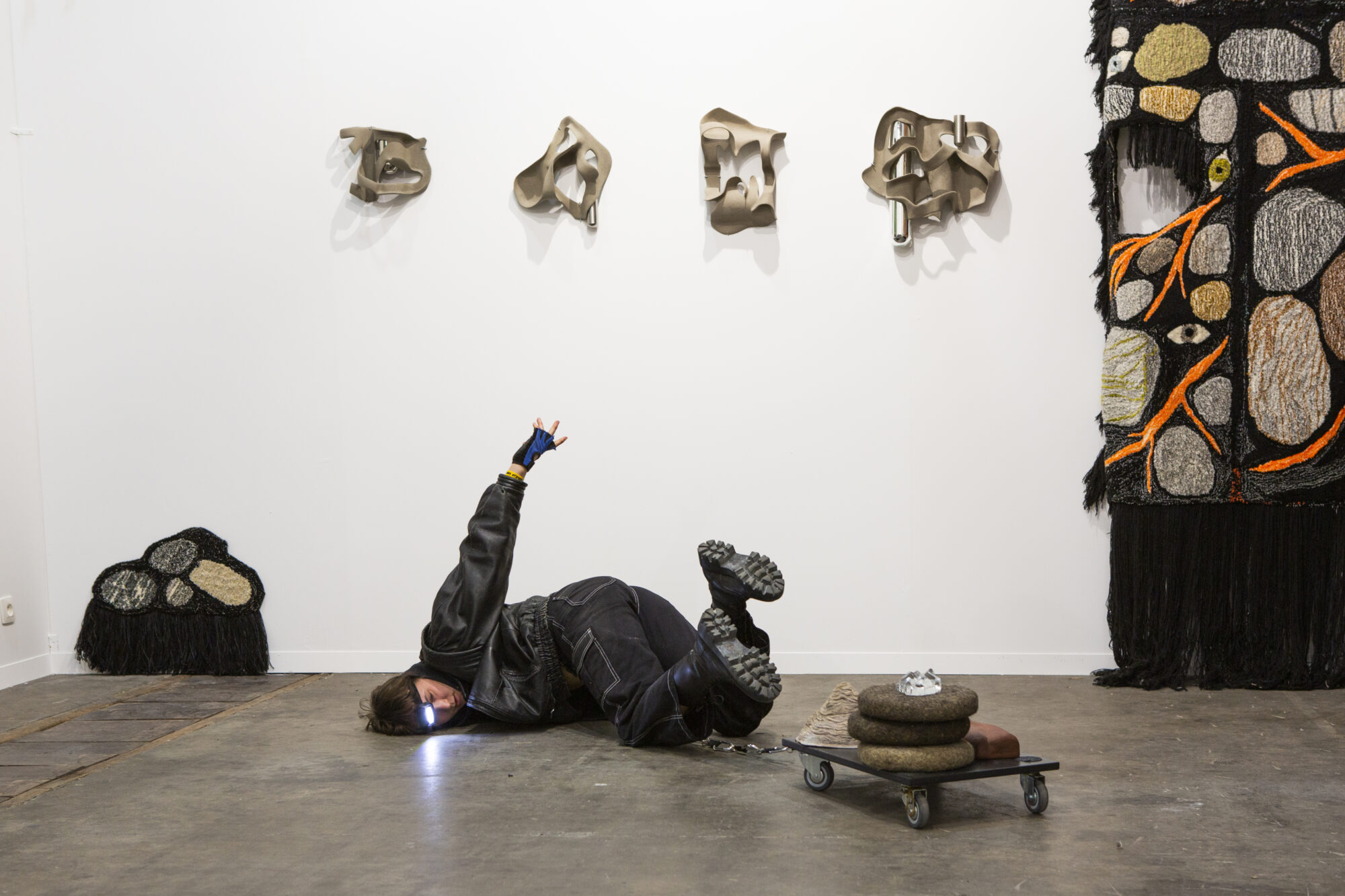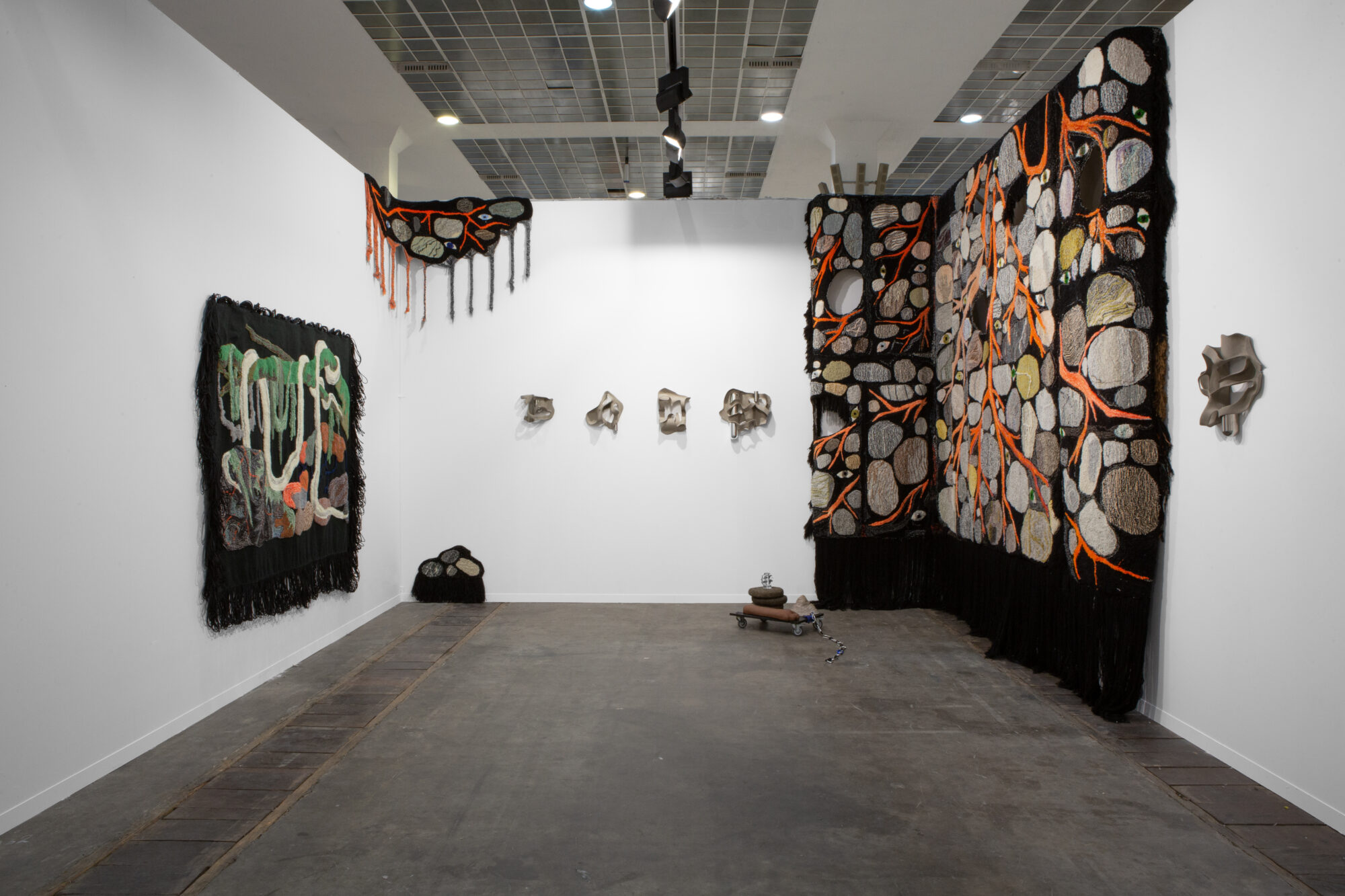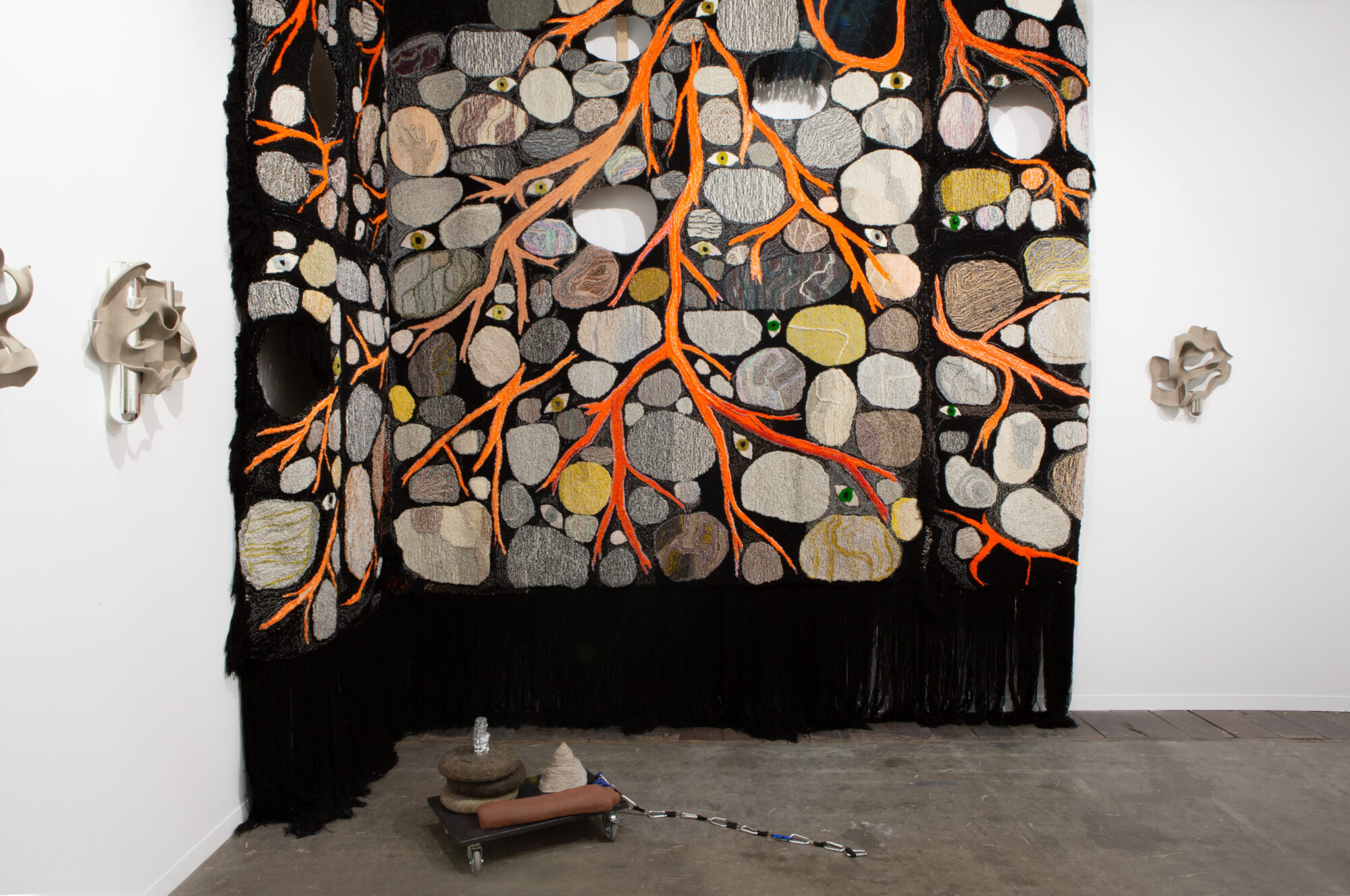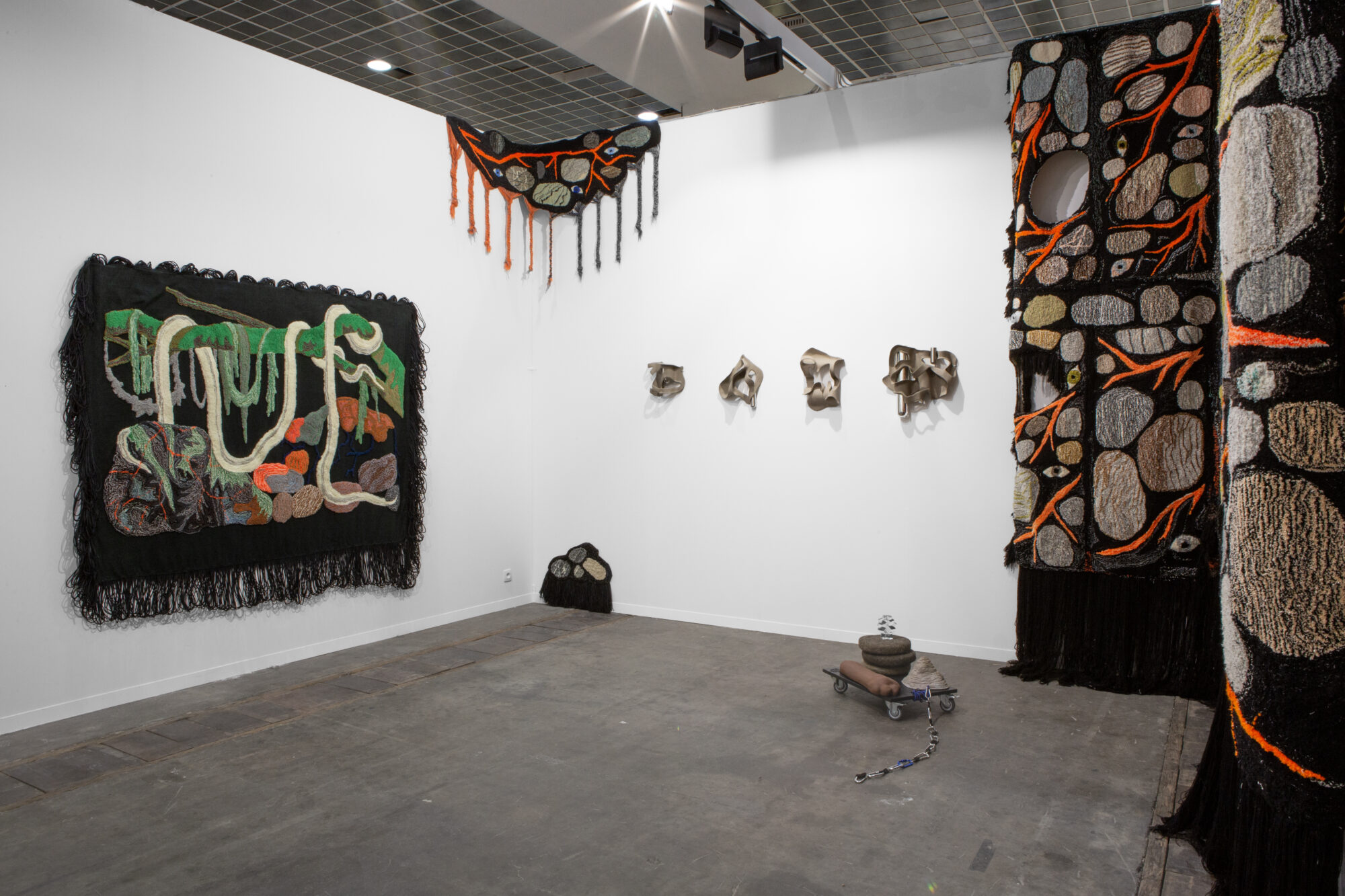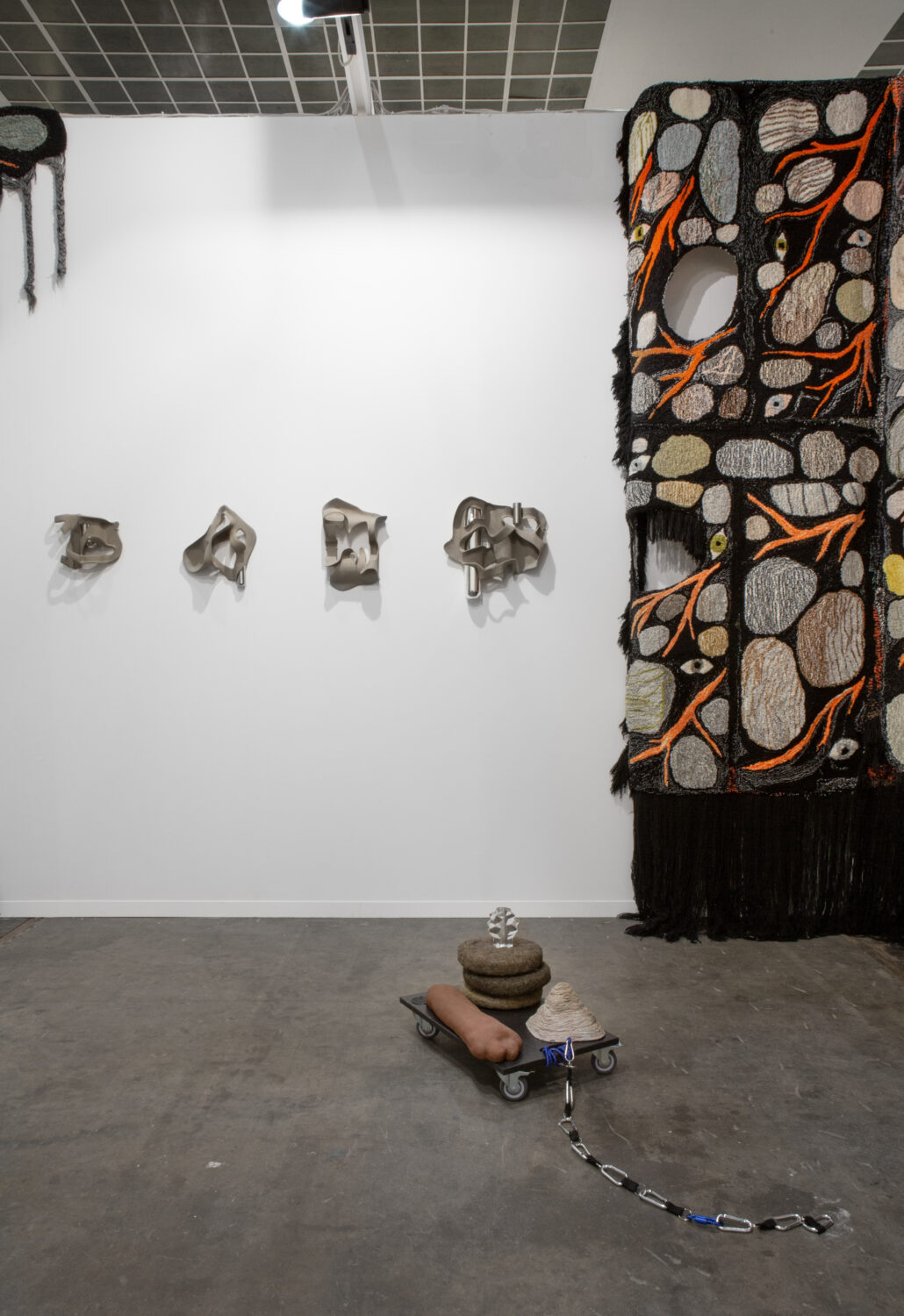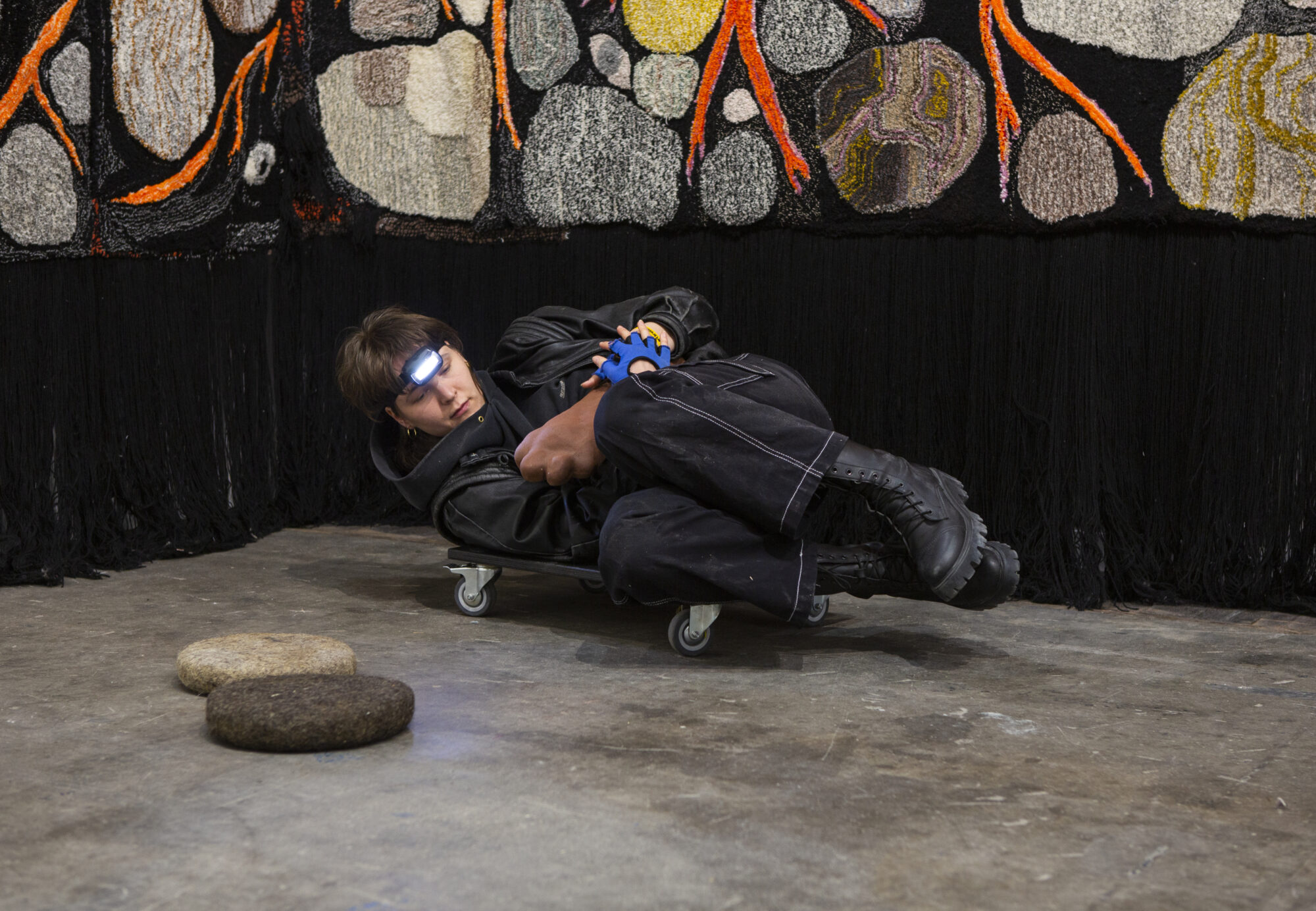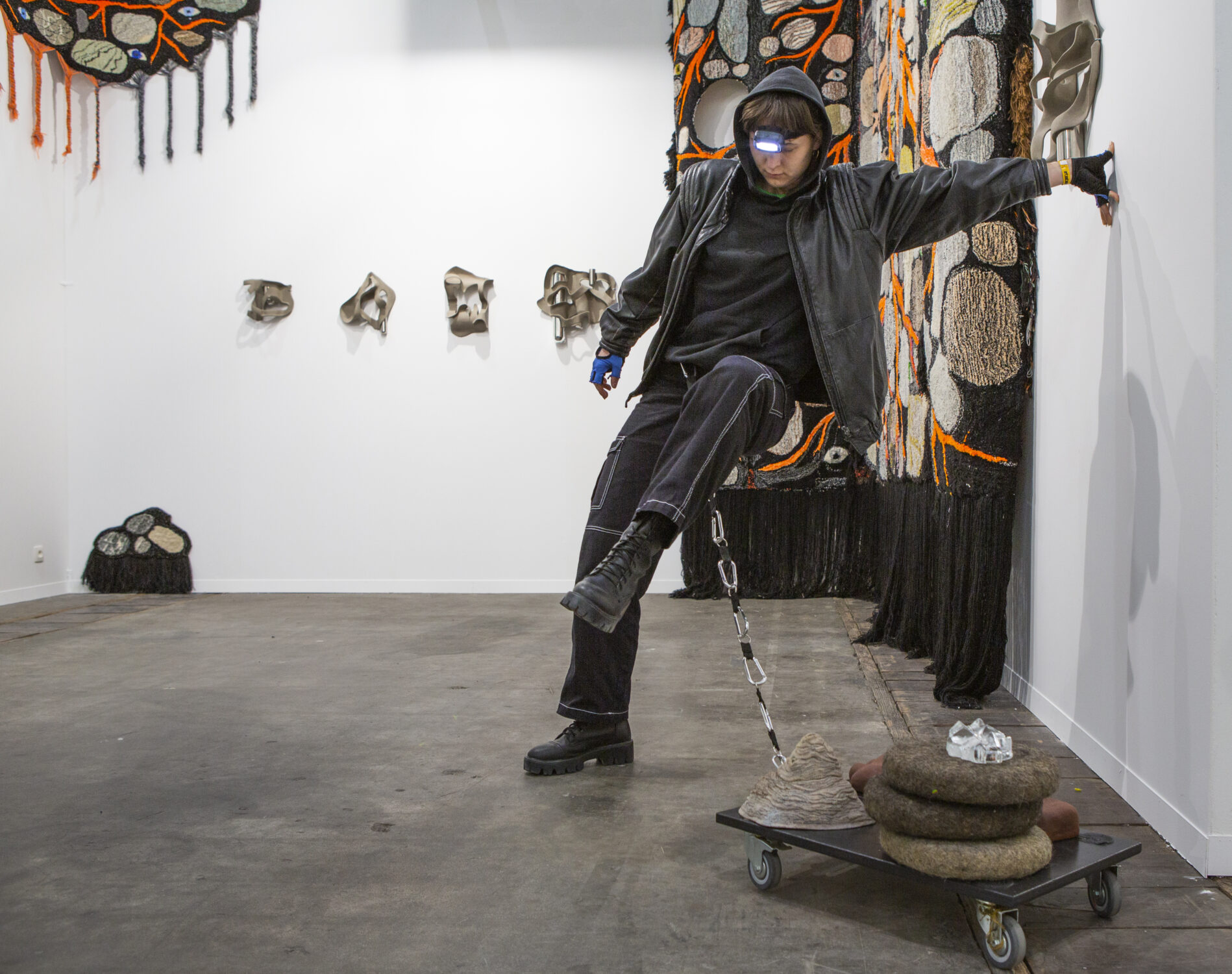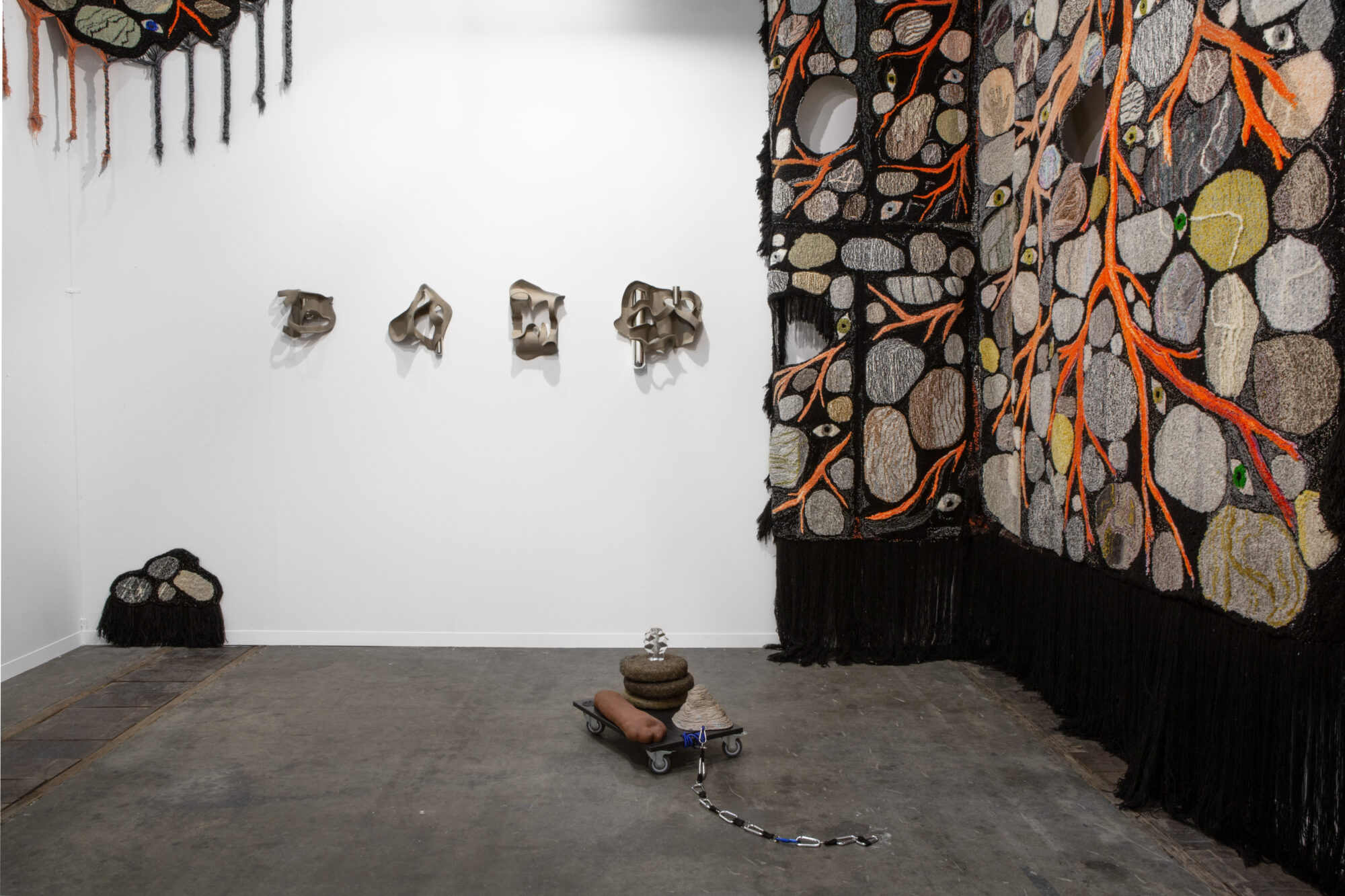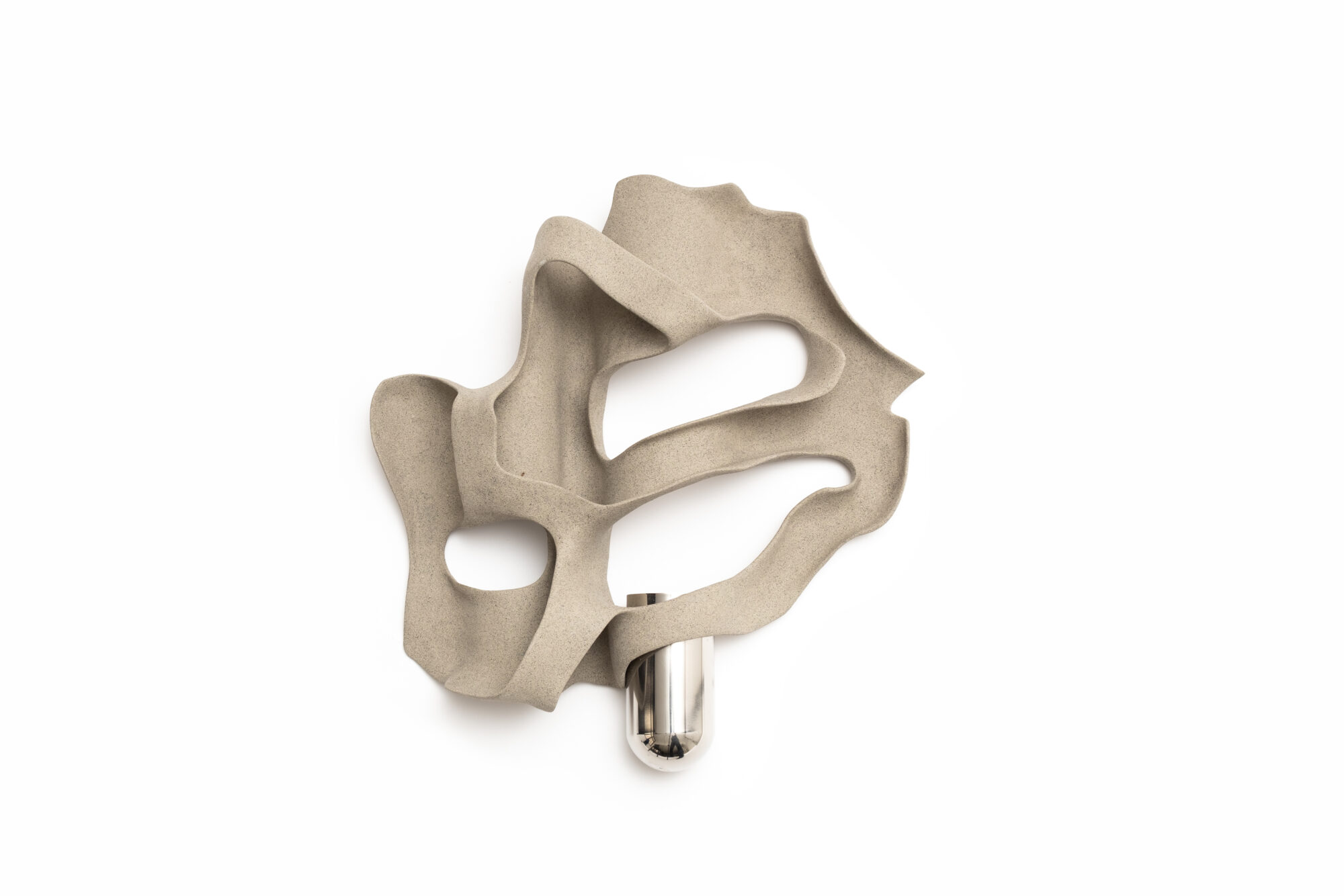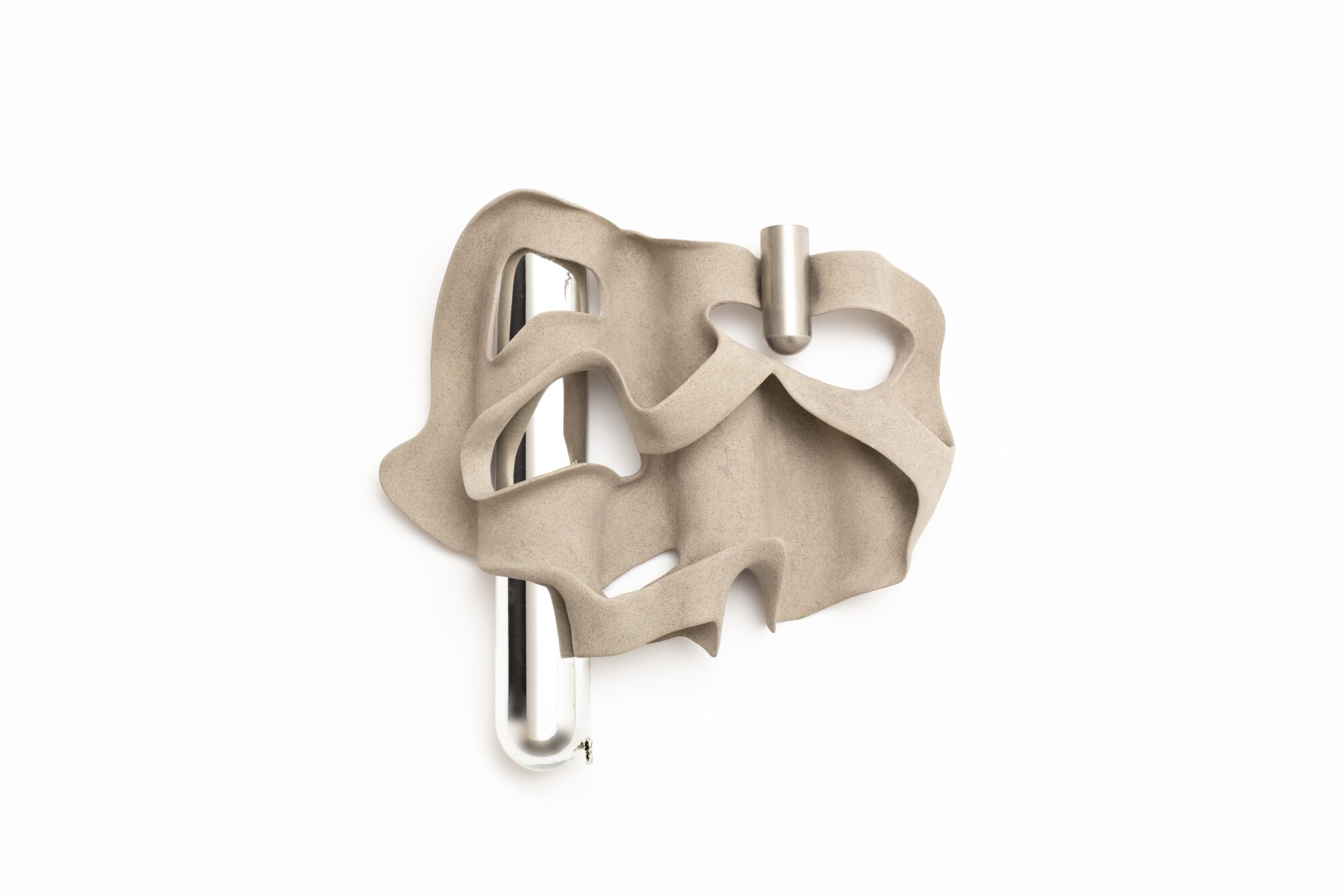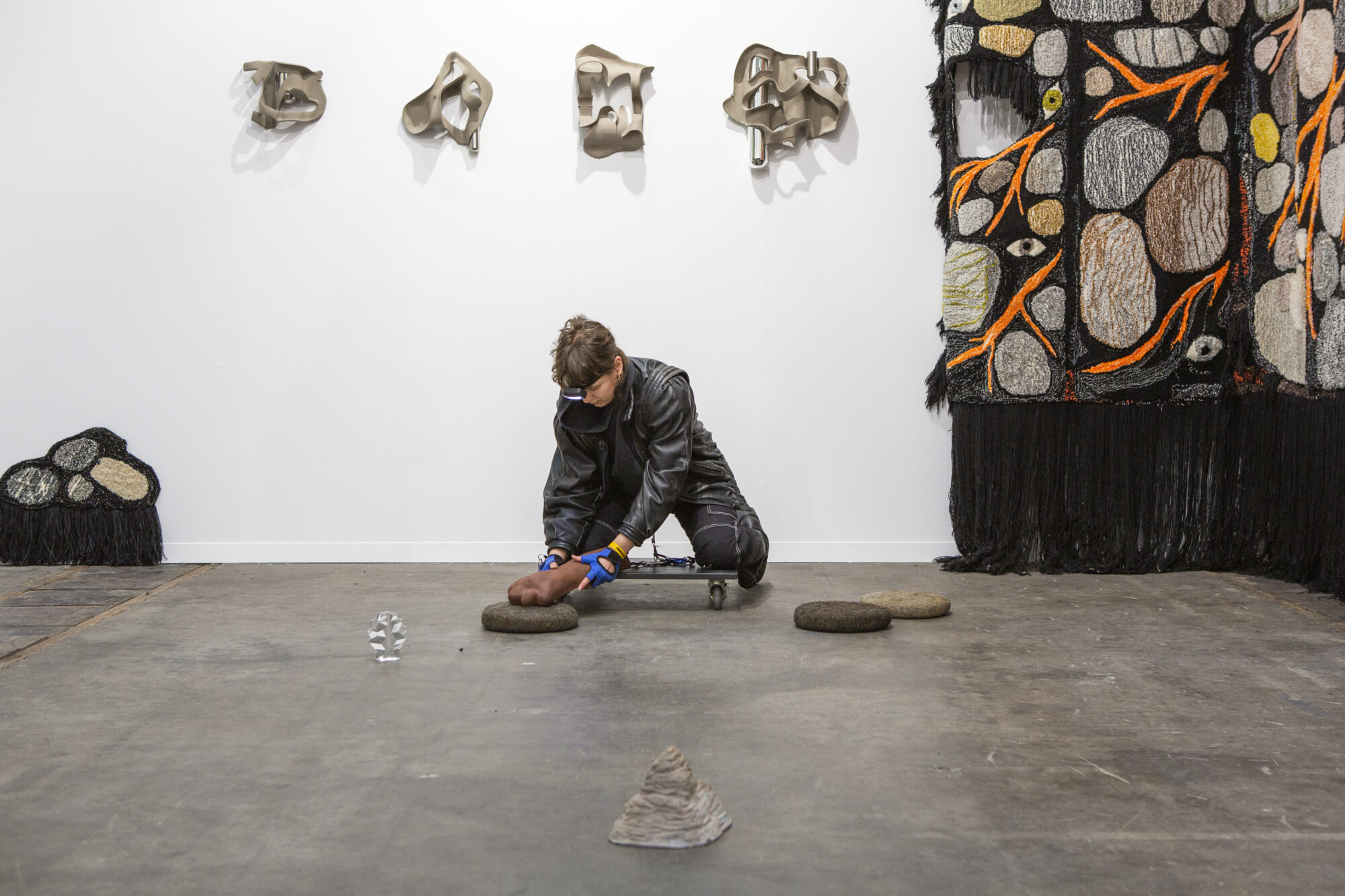


Solo presentation at Art Brussels 2023 (Discovery section). Curated by Šelda Puķīte and Kogo Gallery (Tartu)
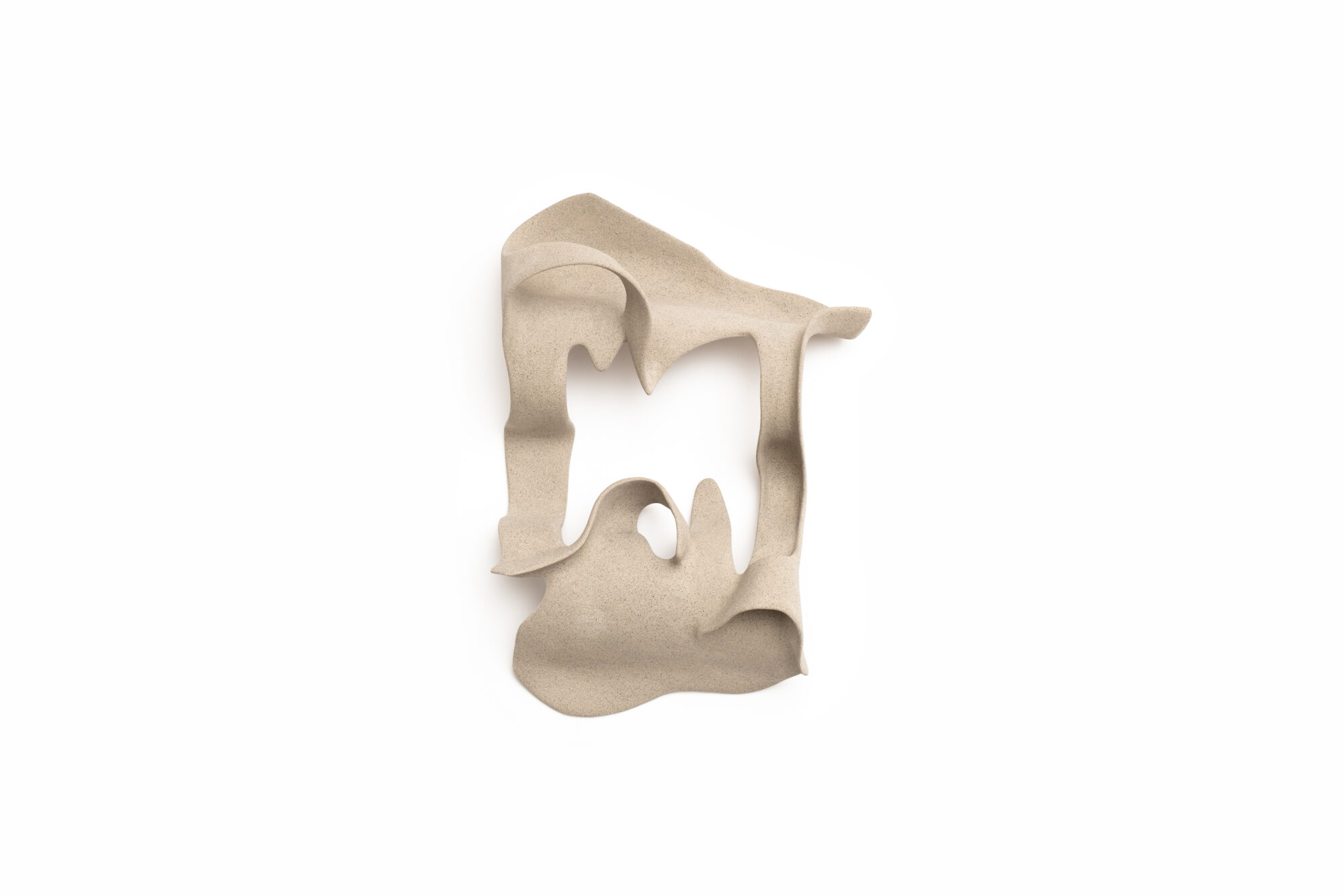
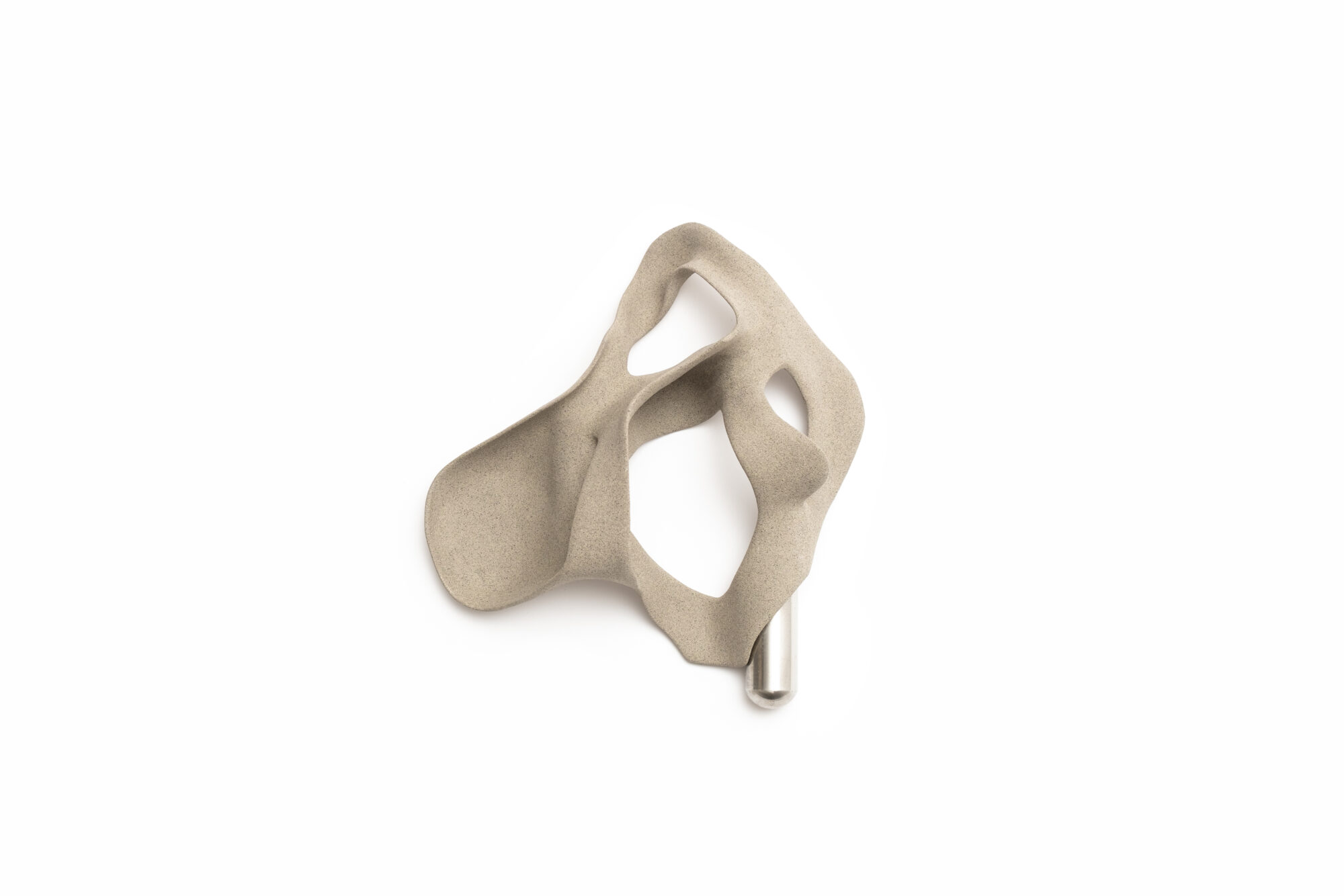
“This work can be seen as a homage to the long history of textile-making, with weaving practices believed to date back as far as 19,000 BCE—and evidence of fibre use reaching even earlier, to around 35,000 BCE. The role of textiles became especially significant during the Ice Age, when dramatic shifts in climate pushed humans to adapt to colder environments. They developed bone needles, crafted warmer and more fitted clothing, and migrated out of Africa. In Estonia, traces of ancient glacial movements remain visible in the varied erratic boulders scattered across the landscape. These forms have become a recurring motif in Põld’s recent textile works—just as subterranean matter features prominently in her ceramic sculptures. Põld’s engagement with fibre and thread feels quietly radical. Her turn toward slowness, tactility, and elemental knowledge evokes an enduring human capacity for care and self-reliance—an alternative to the extractive systems of fast fashion and industrial overproduction that continue to devastate communities and ecosystems alike” – Šelda Puķīte
Performances by Sigrid Savi.
Photos by Lucie Deluz and Albert Kerstna.